13 Best Fall Container Plants for Small Spaces
As the days grow cooler and the leaves start to turn, your outdoor spaces don’t have to lose their color. It’s the perfect time to refresh your porch or balcony with the best fall container plants. Just like summer, autumn has its own beauty.
Containers have made it easy to bring the colors of autumn to your doorstep without having a large garden. After summer flowers fade, these stunning fall plants can transform even the simplest of places into a charming display.
Fall plants make it possible to capture the beauty of autumn in a few pots.
What to Look for in Fall Container Plants
Choosing the right fall container plant is crucial. It’s not just about the looks, but in fact choosing the ones that can withstand cold nights and stay healthy until frost.
The average date for the first frost in the US is around mid-October, so we pick plants that can handle cold and frost. If you don’t choose the right ones, they can collapse when temperatures drop.
Selecting plants with such qualities will give you longer displays. Varieties like pansies, mums, and asters will give you long-lasting foliage.
My 13 Best Fall Container Plants
Let’s dive in and explore the best fall container plants that bring charm to any space
1. Mums
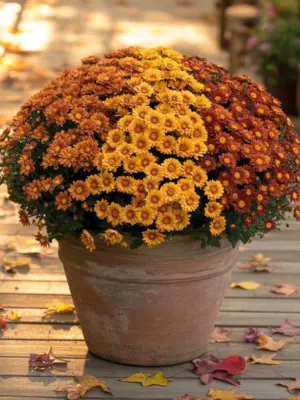
Mums, short for chrysanthemums, are the most iconic fall flowers for containers. They have the ability to bloom till late fall. These beauties come in a wide range of colors, ranging from red, yellow, orange, purple, and even white.
One of the best things about mums is their versatility. They work well in stand-alone pots but also look gorgeous when paired with ornamental grasses or trailing plants like ivy.
- Zone: 4–9 (USDA)
- Mature size: 1–3 ft. tall, 1–2 ft. wide
- Exposure to Sun: Full Sun, Partial Shade
- Soil Requirement: Well-drained, Moist Soil.
- Container Size: 12–16 in. wide, 10–12 in. deep
2. Sedum (Autumn Joy)
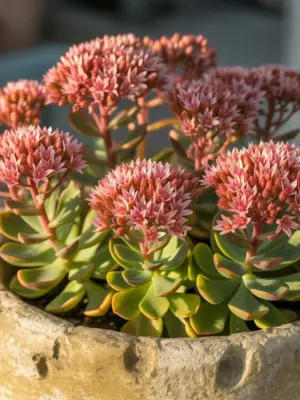
As the name suggests, Sedum Autumn Joy is a masterpiece for fall plantings. Among the wide varieties, Sedum Autumn Joy is one of the best fall container plants.
It provides color to containers and pots when most plants have stopped blooming. It is easy to care for and can tolerate even poor soil. It produces clusters of pink flowers that gradually change to coppery red as the autumn passes.
This dramatic change of color is a unique property that few plants contain. The Autumn Joy grows upright to 2 feet tall and wide with flower buds resembling broccoli.
- Zone: 3–9 (USDA)
- Mature size: 6–24 in. tall and 1.5–2 in. wide
- Exposure to Sun: Full Sun
- Soil Requirement: Sandy, Well-drained
- Container Size: 12–14 in. wide, 10–12 in. deep
3. Pansies
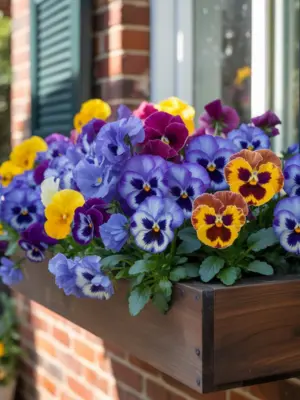
Pansies are one of the best fall container plants that provide a long-lasting display of color. In many regions, they can even withstand the whole winter until spring arrives.
Plant them in mid-September to early October to enjoy their blooms through fall and beyond. Pansies come in an array of beautiful colors, ranging from yellow, purple, blue, orange, and even bicolor combinations.
Deadhead spent or faded flowers to encourage new blooms. Plant them close to each other for a full, lush look.
- Zone: 7–11 (USDA)
- Mature size: 4-8 in. tall, 4-6 in. wide
- Exposure to Sun: Full Sun, Partial
- Soil Requirement: Well-drained
- Container Size: 12–14 in. wide, 8–10 in. deep
4. Celosia
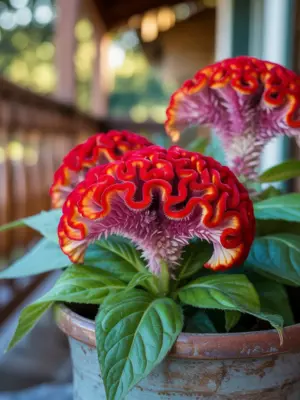
If you are bored with that old display of your porch, then Colesi, with its velvety textures, is here to brighten up the space. Also known as cockscomb or woolflower, it can pair with annuals such as zinnia, marigold, and amaranth.
The dwarf varieties usually grow from 10 to 24 inches tall, making them ideal for containers. It continues to flower well until late fall; however, it’s not frost-tolerant.
Celosia comes in fiery shades of red, orange, pink, yellow, and purple. Celosia fits beautifully in pots and containers, creating a marvelous display on porches, patios, and balconies.
- Zone: 3-11 (USDA)
- Mature size: 6-36 in. tall, 12-24 in. wide
- Exposure to Sun: Full Sun
- Soil Requirement: Well-drained
- Container Size: 10–12 in. wide, 8–10 deep
5. Ornamental Kale
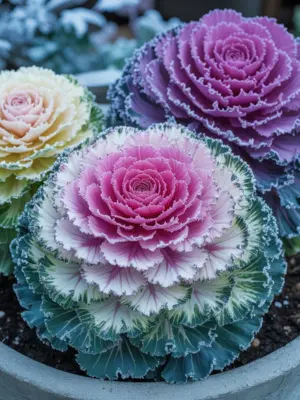
Ornamental Kale is a low-maintenance, easy-to-grow plant that shines when temperatures start to drop. It is quite resilient and can withstand cold temperatures, adding a lasting charm to fall containers.
The plant’s central leaves, which are green during the warmer months, develop stunning patterns and colors—including shades of pink, purple, white, and red—when exposed to cooler temperatures.
Hence, planting in early fall gives it time to establish and transform color before the cooler weather arrives.
- Zone: 2–11 (USDA)
- Mature size: 12–18 inches tall and wide
- Exposure to Sun: Full Sun
- Soil Requirement: Well-draining, Loamy Soil
- Container Size: 12–16 in. Wide, 10–12 in. Deep
6. Asters
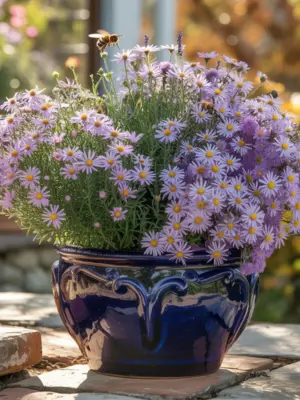
These daisy-like flowers are the undeniable superstars of the fall garden, providing a bunch of vibrant beauty when everything else is fading. With their star-like blooms, Asters offer a vital nectar source for late-season pollinators like bees and butterflies.
While many people think of asters as being exclusively purple, they come in a range of colors, including purples, lavenders, pinks, reds, whites, and even true blues.
Asters attract pollinators and are also deer-resistant. With their vibrant blooms, they provide color, attract pollinators, and bring structure to containers and borders. These qualities make asters one of the best fall container plants for gardeners.
- Zone: 3–8 USDA
- Mature size: 3-6 ft. tall, 2-3 ft. wide
- Exposure to Sun: Full
- Soil Requirement: Moisture-Retentive, Fertile Soil
- Container Size: 12–14 in. Wide, 12–16 in. Deep
7. Marigolds
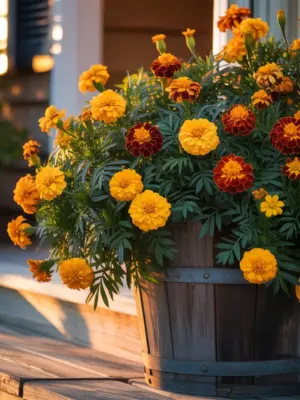
Merigolds are among the most popular flowers for fall container gardening. With warm shades of gold, orange, red, and yellow, marigolds bring a splash of color that perfectly matches the rich tones of autumn.
They fit beautifully in small containers, hanging baskets, or as fillers alongside ornamental grasses, pansies, or mums. Marigolds are low-maintenance, which makes them an excellent choice for busy gardeners.
They bring a warm, welcoming glow to outdoor spaces, ensuring your garden stays attractive even when temperatures drop.
- Zone: 2–11 USDA
- Mature size: 4–48 in. tall, 6–24 in. wide
- Exposure to Sun: Full
- Soil Requirement: Slightly Moist, Well-Draining Soil,
- Container Size: 14–18 in. Wide and 10–12 in. Deep
8. Japanese Anemone
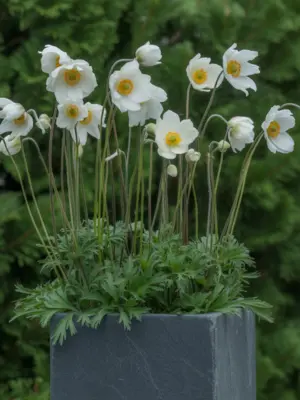
If you are looking for something elegant and long-blooming, then the Japanese Anemone can be a stunning choice for you. The flowers come in shades of white, pink, and lavender, often with a sunny yellow center.
Their upright growth habit allows them to fill vertical space without overcrowding. If you live in a mild climate, your plant may survive the winter outdoors with minimal protection. With the right care, these plants will reward you with weeks of delicate blooms.
- Zone: 4–8 (USDA)
- Mature size: 2–4 ft. tall, 1–2 ft. wide
- Exposure to Sun: Partial Shade to Full Sun
- Soil Requirement: Well-draining, fertile soil, slightly acidic to neutral
- Container Size: 12–16 in. wide, 10–12 in. deep
Did You Know
With proper care, fall container plants like pansies and mums can bloom continuously for 8–10 weeks.
9. Black-Eyed Susan
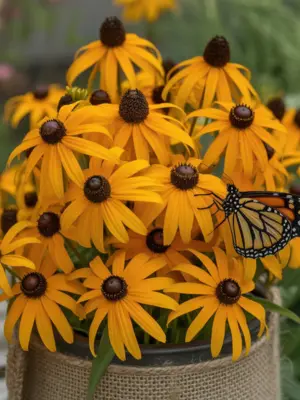
Black-Eyed Susan, aka Rudbeckia, is an American native perennial that works well in fall containers, adding an amazing display to any patio or balcony. It is a pollinator-friendly plant and attracts bees and butterflies.
An easy way to extend its blooming time is to cut some of its stems in early summer so it produces flowers later. It is preferred to plant it in well-draining soil; however, it adapts to most soil conditions.
It is relatively low-maintenance and adds a long-lasting color to any seasonal container display. You can grow them from seed or buy a plant.
- Zone: 3–9 USDA
- Mature size: 2-3 ft. tall, 1-2 ft. wide
- Exposure to Sun: Full Sun
- Soil Requirement: Sandy, loamy, well-draining soil
- Container Size: 12–14 in. Wide, 12 in. Deep
10. Boltonia
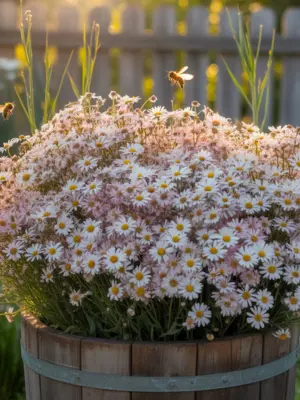
Boltonia, also known as false aster, is one of the most underrated yet exceptional plants for container gardening. This tall prairie plant is native to eastern and central North America. It blooms late in the season and continues to bloom until frost.
Boltania produces a ton of small white and pinkish flowers with yellow centers, giving it a cloudy structure. The blooms are attractive to bees, butterflies, and other pollinators.
Just like other native perennials, Boltonia is easy to care for. It is deer-resistant and free from any serious pest or disease.
- Zone: 4–9 USDA
- Mature size: 3–4 ft. tall, 2-3 ft. wide
- Exposure to Sun: Full Sun
- Soil Requirement: wet soil
- Container Size: 16–18 in. Wide, 12–14 in. Deep
11. Russian Sage
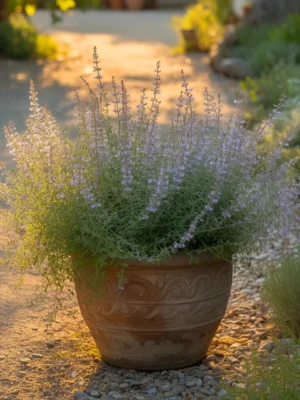
This sun-loving woody perennial begins blooming in summer and continues through the fall months. Its airy appearance, unique texture, and drought tolerance make it a fantastic choice for gardeners.
Russian Sage typically grows 3 to 5 feet tall in garden beds, but in containers, it adapts well to a slightly smaller size. It is native to Central and South Asia.
While planting this perennial, use a well-draining potting mix; otherwise, it may rot in poorly-drained soil.
- Zone: 4–9 (USDA)
- Mature size: 3–5 ft. tall, 2–3 ft. wide
- Exposure to Sun: Full Sun
- Soil Requirement: Well-draining soil, drought-tolerant
- Container Size: 16–18 in. wide, 12–14 in. deep
12. Snapdragons
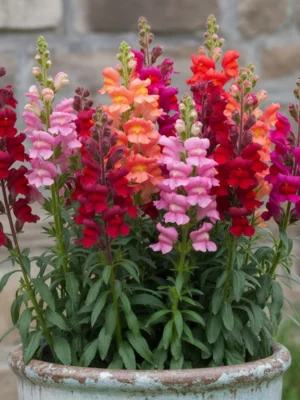
Snapdragons are great plants for containers with vertical spikes packed with bell-shaped flowers. Snapdragons are naturally suited to cooler climates. With proper care, they can bloom continuously throughout the fall.
When it comes to colors, few flowers offer such a wide range of colors. Snap dragons come in reds, pinks, oranges, yellows, purples, and even bi-color patterns. Native to the Mediterranean, these plants are hardy annuals in most climates.
This old garden favorite takes about two to three months from germination to flowering. Their cool-season performance makes snapdragons one of the best fall container plants.
- Zone: 7–10 (USDA)
- Mature size: 1–3 ft. tall, 6–12 in. wide
- Exposure to Sun: Full Sun to Partial Shade
- Soil Requirement: Well-draining, Fertile Soil
- Container Size: 12–14 in. wide, 10–12 in. deep
13. Alliums
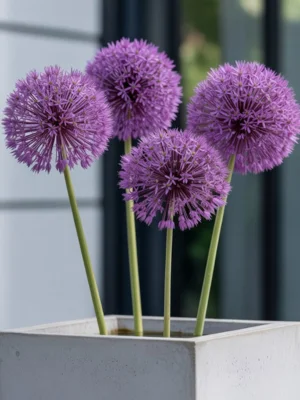
With globe-shaped, pinkish flowers, Alliums are an elegance to any outdoor setting. You should plant them in early fall, between September to November, so that they can establish strong roots before winter sets in.
Alliums come in a variety of colors, with the most common shades being purples, lilacs, and deep violets. Alliums are drought-tolerant; however, when grown in containers, they will need regular watering, but make sure the soil does not become waterlogged.
- Zone: 3–9 (USDA)
- Mature size: 12–36 in. tall, 6–12 in. wide
- Exposure to Sun: Full Sun
- Soil Requirement: Well-draining, moderately fertile soil
- Container Size: 12–14 in. wide, 10–12 in. deep
How to Plant & Care for Fall Containers
Planting fall containers is simple and rewarding, even for beginners. Start by choosing containers with drainage holes to prevent waterlogging. Fill them with high-quality potting mix; avoid using garden soil as it compacts easily. For best results, mix in a slow-release fertilizer to nourish your plants throughout the season.
When arranging your plants, follow the “thriller, filler, and spiller” method: place a tall, eye-catching plant (thriller) in the center, surround it with medium-height plants (fillers), and add trailing plants (spillers) around the edges for a balanced look.
Water regularly, especially after planting, to help roots establish. As temperatures cool, water less frequently, but don’t let the soil dry out completely. Deadhead spent blooms to encourage more flowers and remove any yellowing leaves.
Place your containers where they receive at least 4–6 hours of sunlight daily. In colder regions, move them closer to walls or under a porch for protection from frost. If frost arrives early, cover your plants overnight with a light cloth.
With these simple steps, your fall containers will stay colorful, healthy, and vibrant until winter arrives.
Characteristics of Top Fall Container Plants
| Plant | Height (Mature) | Spread (Width) | Design Role |
|---|---|---|---|
| Russian Sage | 3–5 ft. | 2–3 ft. | Thriller (Tall/Back) |
| Boltonia | 3–4 ft. | 2–3 ft. | Thriller (Tall/Back) |
| Japanese Anemone | 2–4 ft. | 1–2 ft. | Thriller (Tall/Center) |
| Black-Eyed Susan | 2–3 ft. | 1–2 ft. | Thriller/Filler |
| Mums | 1–3 ft. | 1–2 ft. | Filler (Volume) |
| Ornamental Kale | 12–18 in. | 12–18 in. | Filler (Texture) |
| Snapdragons | 1–3 ft. | 6–12 in. | Thriller (Spikes) |
| Alliums | 12–36 in. | 6–12 in. | Thriller (Structural) |
| Sedum | 6–24 in. | 1.5–2 in. | Filler |
| Celosia | 6–36 in. | 12–24 in. | Filler |
| Marigolds | 4–48 in. | 6–24 in. | Filler/Edging |
| Pansies | 4–8 in. | 4–6 in. | Filler/Edging |
Tips for Longevity
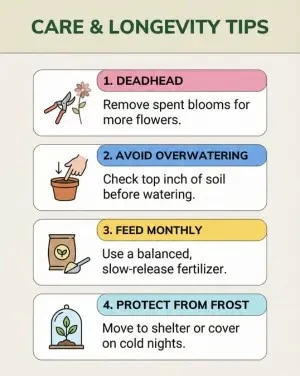
To keep your fall containers looking fresh for weeks, start by choosing hardy, cold-tolerant plants like pansies, mums, or ornamental Kale. Regularly remove faded flowers and dead leaves to encourage new growth and prevent disease.
Avoid overwatering—cooler weather means soil dries out more slowly. Check moisture levels by feeling the top inch of soil before watering. Feeding your plants with a balanced, slow-release fertilizer once a month will help them stay vigorous through the season.
As temperatures drop, move containers to sheltered spots such as porches or near walls to protect them from wind and frost. You can also add a layer of mulch to insulate the roots.
Finally, rotate your pots occasionally to ensure even sunlight on all sides. With these small care steps, your fall containers will continue to brighten your space long into the chilly season.
Watering and Fertilizing
Watering and fertilizing your fall container plants properly keeps them healthy and blooming all season. Always check the soil before watering — if the top inch feels dry, it’s time to water.
Pour slowly until water drains from the bottom to reach the roots, but avoid leaving pots sitting in water, as soggy soil can cause root rot.Fertilizing helps plants stay strong and colorful.
Use a balanced liquid fertilizer every 2–3 weeks, or mix a slow-release fertilizer into the potting soil at planting time. Don’t overfeed, as too much fertilizer can burn the roots
Zone & frost considerations
When choosing fall container plants, always consider your growing zone. Plants that thrive in your zone will handle cooler temperatures better and last longer into the season.
Check local frost dates to know when cold weather usually begins. As nights get colder, protect your containers from early frost. Move smaller pots indoors or onto a sheltered porch.
For larger containers, cover them with frost cloths or light blankets overnight. Grouping pots also helps them stay warmer.
Best Soil for Fall Container Plants
The best soil for fall container plants is a light, well-draining potting mix. Avoid using garden soil—it’s too heavy and can trap water, causing root rot.
A good potting mix holds moisture while allowing excess water to drain easily. For extra nutrients, mix in a bit of compost or slow-release fertilizer before planting. You can also add perlite or coco coir to improve airflow and drainage.
Fall Container Choices
When selecting containers for your fall plants, choose pots that are sturdy and weather-resistant. Materials like ceramic, resin, or heavy plastic work well because they handle cool temperatures without cracking. Make sure each pot has drainage holes to prevent water buildup.
Use containers of different sizes and heights to create visual interest on your porch or balcony. For a natural look, go with earthy tones like brown, gray, or terracotta that complement fall colors. With the right containers, your fall planters will look stylish and stay healthy all season long.